From Cable TV to TikTok: How Being a Motorsport Fan Changed in Two Decades. What Happened?

I have to admit something before we get into this. I'm still new to using this Claude, and I actually asked it to help me arrange a pile of scattered thoughts this morning into something readable. So there's a small joke buried in an article about creators versus consumers: even the journalist writing about "doing the thing yourself" needed an AI to help him organize his own thinking. I typed every word of what follows myself. I just needed a little help finding the shape of it.
It started with a video of a friend playing drums.
This morning Zach Lucero from Makina Moto posted himself behind an acoustic kit on Facebook. No laptop, no sample pack, no MIDI controller. Just sticks, kicks, and noise. I stopped scrolling, not because it's unusual to see Zach drum, but because for a few seconds it felt like being sixteen again.
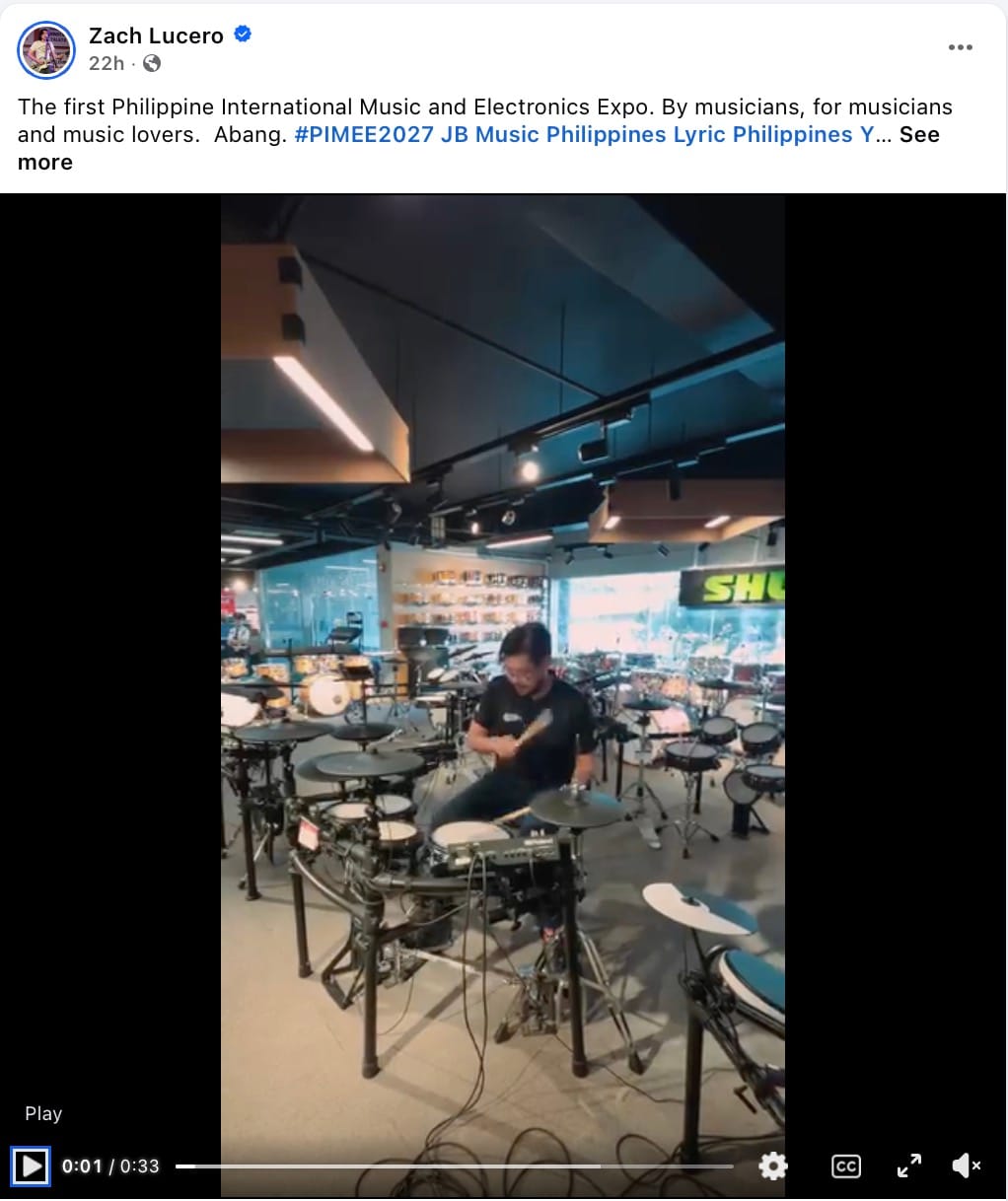
I enjoyed the clip. Playing drums were one of my frustrations. Then I checked the reactions. Barely. If any, were from the oldies like me.
That got me curious. Drums haven't disappeared. Social media has practically built a genre around attractive young teens sitting behind kits. FL Studio and Garageband did the drums. But the drummer has quietly become a novelty act, the kind of thing you watch precisely because almost nobody does it anymore. Guitar has drifted the same way, just slower. When I was in school, half the class could strum Goo Goo Dolls or Eraserheads song at a party. You didn't need to be a musician. You just needed enough chords to sit in.
So I started pulling on the thread, and it went a lot further than music.
The wave I grew up in:
Let me take you back to the actual thing that started this, because I think it's the strongest part of the story: the 90s wave of racing.
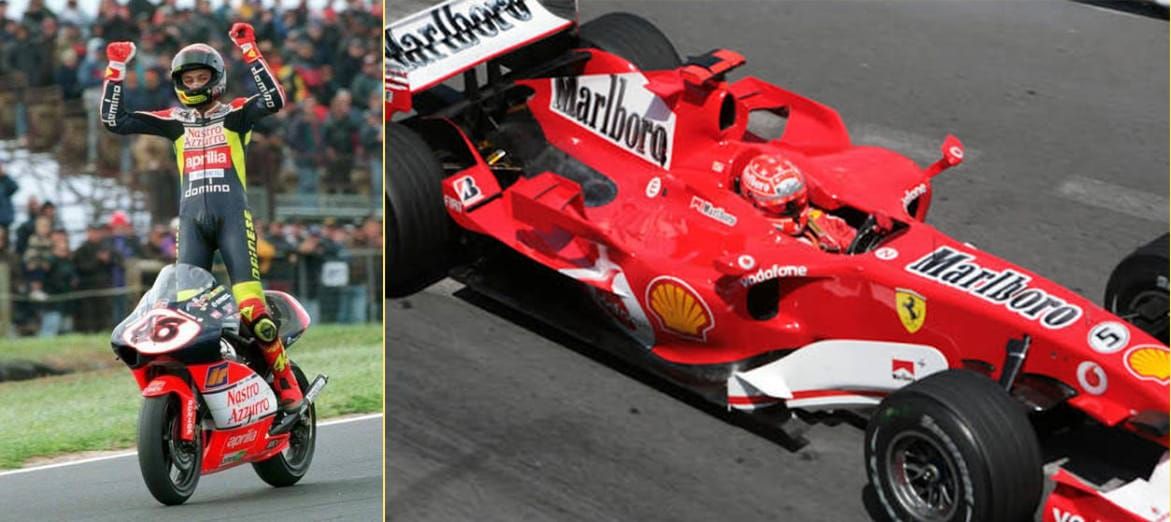
Schumacher. Valentino Rossi. Carl Fogarty on WSBK, live on ESPN or Star Sports, cable TV, on a Sunday. And I mean all whole races, 125cc, 250cc, warm-up lap to podium and press-cons, because that was the only version that existed. Nobody was clipping it into Tiktok highlights yet.
"If you were a kid who liked racing back then, you almost certainly became a kid who also loved cars or bikes, full stop."
My classmates who followed F1, MotoGP, or World Superbike in the 90s and early 2000s weren't just watching from the couch. They were car addicts. Bike addicts. Some of them went to actual races. A few of us could already change a tire at eleven or twelve years old, which sounds like a strange flex now but felt completely ordinary then. I raced scooters and dirtbikes myself as a kid, badly, but I raced them.
Now you can watch forty seconds of highlights and a meme about the podium interview on TikTok and genuinely feel caught up, because for a lot of people, that is caught up. I'm not even saying that's wrong. I'm saying eleven-year-old me would've found the idea of skipping the actual race faintly insane.
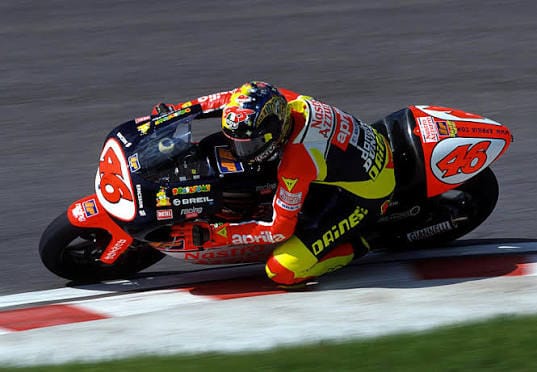
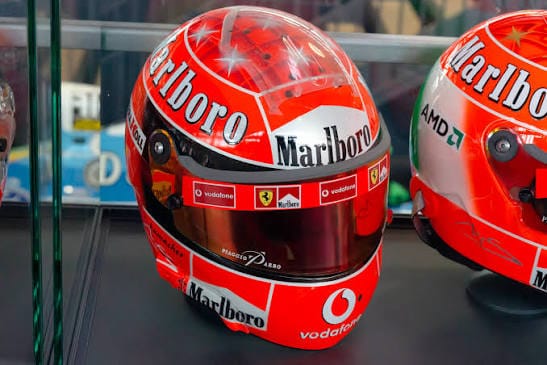
Fandom and machine were the same hobby wearing two faces. You didn't just consume the sport. You were pulled into the world around it, whether you meant to be or not.
Now look at what's happened to that same sport. F1 and MotoGP audiences haven't shrunk, they've exploded. And I know, personally:
"There are new diehard F1 fans who don't care about cars at all. Don't drive, don't want to. They're there for the memes, the driver love stories, the social media hypecycle. That's not a criticism, it's just a different door into the same room."
And I think it's worth being honest that this isn't unique to motorsport either. It happens to music like what I observed with Zach's case. People can love music without ever touching the guitar or drums.
More importantly it happens in every sport. Someone can love a footballer without ever having kicked a ball, love a basketball star without ever having shot a hoop.
Which made me think about myself, because I loved football posters and shiny basketball cards as a kid too, but only because I was already out there playing football and basketball with my neighbours. The posters and cards were souvenirs of something I was already doing with my body, not a substitute for it.
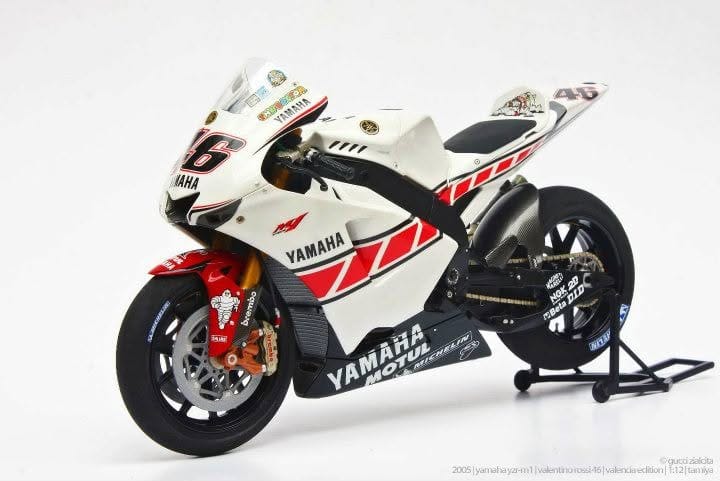
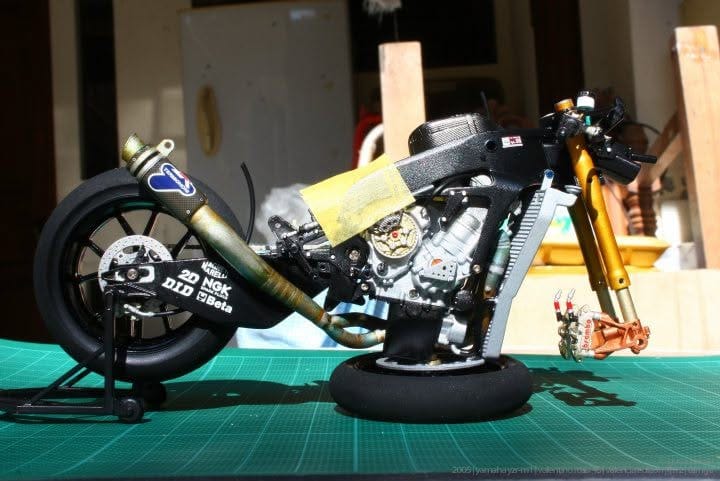
Same with the scale models. My brother and I built airplanes and cars with our own hands, carefully glued, spilled paint on the desk, and it mattered because building them was the whole point, not just owning them.
I liked using my hands. And honestly, I'm glad I didn't have the internet back then. Not because the internet is bad, it's literally my career now, but because not having it meant boredom had nowhere to go except into something physical.
Where the loop broke
There's actual research behind this feeling, and it predates smartphones by a couple of decades, which surprised me when I found it. Researchers Sandra Hofferth and John Sandberg tracked how American kids spent their time between 1981 and 1997 and found a steady drift away from unstructured play toward scheduled activity. A follow up looking at 1997 to 2003 found something sharper: among children aged six to twelve, sports participation fell from 76 percent to 60 percent, and outdoor play fell from 16 percent to 10 percent. A separate analysis of the same data put the drop in free play at roughly 25 percent over that stretch. None of that had anything to do with a phone in anyone's pocket yet. Tighter schedules, denser cities, more supervision, less unstructured time, all of it was already reshaping childhood before the iPhone existed.
"What the smartphone did was finish the job, not by adding one more entertainment option, but by removing boredom as a problem that did not need solving at all."
When I was twelve and bored, my options were limited enough that I usually ended up doing something. A ball, a bike, a half stripped moped, a guitar with three chords I half remembered. Today a kid is bored for about three seconds before the algorithm starts serving content, and it isn't just one hobby on offer, it's everyone else's hobby, endlessly. You can watch someone drum, race, restore a car, build a plane, without ever touching any of it yourself.
Two things I actually learned
I want to be honest that I came out of writing this with two ideas I hadn't fully sat with before, and I'd rather share them as things I noticed than as conclusions I'm certain about.

The first is personal, and a little embarrassing. I recently realized that most people just consume and never create, and for years I assumed everyone was secretly like me: watching something and immediately scheming about how to make their own version of it. Turns out I was the weird one. Most people watch a video and just... enjoy the video. Revolutionary concept, I know. The tools got democratized a lot faster than the urge to actually use them did.
The second is the bigger one, the one this whole piece keeps circling: we moved from a culture of participants to a culture of spectators. Not entirely, and not for everyone, but as a general current. The old loop ran from the race to the machine to the mechanics to the hands on hobby and back to the race again. The new loop can run entirely through a screen, driver to personality to algorithm to race, and never touch a spanner at all.
I don't think that makes the new fan less real. F1's own reporting shows a fanbase of 827 million in 2025, up 63 percent since 2018, with 43 percent of it under 35. MotoGP reports 632 million fans, up 12 percent in a year. Nobody can look at those numbers and say motorsport fandom is dying. What's changed is the path in.
"Fandom used to demand participation. Now it doesn't, and the sport has never been bigger for it."
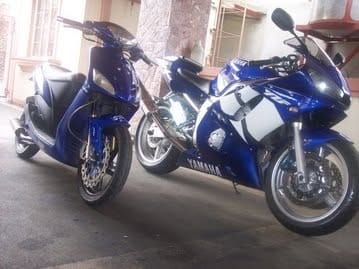
Here's the part that surprised me when I went looking for numbers. When you loved Rossi, you had to have a Yamaha. That's why every bike I've owned has been a Yamaha, it wasn't really a choice by the time I was old enough to buy one.
Today I don't think the car or the bike carries that same pull anymore. Turns out that's not just a feeling, it's a known weak spot in marketing: the "halo effect," the idea that loving a race team makes you buy the road car, is notoriously hard to actually prove. Even Toyota tried to use their F1 program to sell the Aurion off the back of it, and it never really landed.
What does convert, with real numbers behind it, is the stuff you can actually afford. Puma reported an eightfold jump in Ferrari branded gear after signing Hamilton. Red Bull Racing's merchandise sales jumped 40 percent in a single strong season. Nobody's buying the car. Everybody's buying the cap.
What I miss isn't the decade. Frankly, the 90s had terrible haircuts and worse dial-up. What I miss is the friction. Boredom used to be a problem you had to solve yourself, and every so often the solution stuck with you for life. Mine happened to be motorsport, mostly because nothing else was around to steal my attention, which is either a beautiful origin story or proof that I became a journalist by process of elimination. I'll let you decide.
Today, I can watch a hobbyist rebuild an engine in Japan, a local boy race a motorcycle in Spain, a shirtless kid doing wheelies in Brazil and someone play drums in his bedroom in China, all without leaving my chair. Somewhere, eleven-year-old me, ratchet wrench in hand, would be deeply unimpressed.
Which is wonderful.
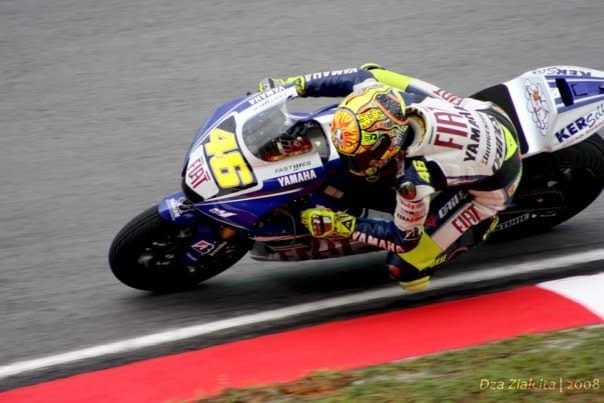
I don't have a tidy fix for any of this. I'm a guy who raced scooters and now writes motorsports stories for a living.
It is also probably the perfect ironic ending to this article: I'm sitting at a computer, writing about how people should participate more instead of just consuming.
So, technically, I'm contributing to the problem.
At least I'm making something?
That's what I'm telling myself, anyway.

Sources and further reading
- Hofferth, S. L., & Sandberg, J. F. (2001). Changes in American Children's Time, 1981–1997. ScienceDirect. https://www.sciencedirect.com/science/article/pii/S1040260801800113
- Hofferth, S. L. (cited in) Resurrecting Free Play in Young Children. JAMA Pediatrics. https://jamanetwork.com/journals/jamapediatrics/articlepdf/485902/POA40136.pdf
- Formula 1. (2025). Formula 1's record-breaking 2025 season in numbers.https://www.formula1.com/en/latest/article/formula-1s-record-breaking-2025-season-in-numbers.irq7aR8PcyAw7ysO72vJn
- Formula One World Championship Limited. Formula 1 on pole position in race to engage next generation of sports fans. https://corp.formula1.com/formula-1-on-pole-position-in-race-to-engage-next-generation-of-sports-fans/
- Shah, D., & Williams, A. L. (2024). "Drive to Survive" Drives New Fans to Formula 1? Studying Viewer Experience. Communication & Sport / SJSU ScholarWorks. https://scholarworks.sjsu.edu/faculty_rsca/5321/