Anatomy of an EWC Pit Stop at Suzuka with Suzuki Yoshimura SERT Motul
A Choreographed Chaos
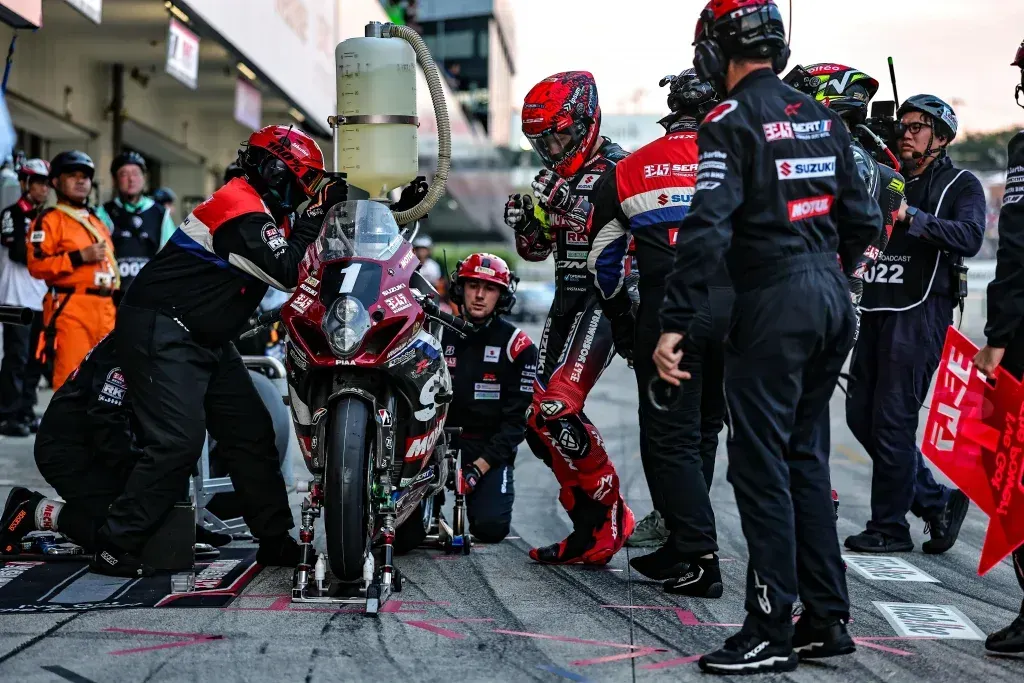
At the FIM Endurance World Championship (EWC) Suzuka 8 Hours, the pit lane is a tactical battleground where races are won or lost. When a top-tier factory team can execute a complete rider swap, front and rear wheel change, repair a damage and full fuel top-up in under 17 seconds, it becomes high-stakes choreography.
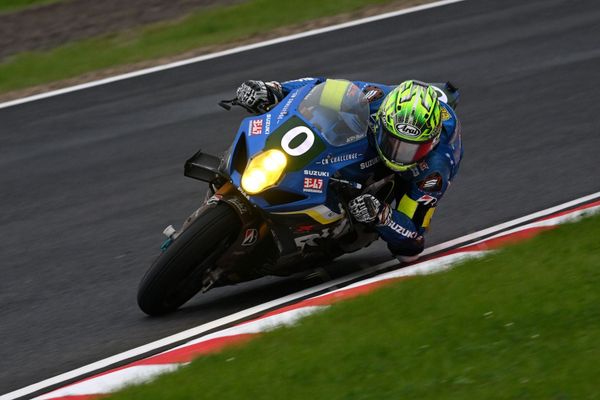
Watching the factory-backed Yoshimura SERT Motul squad operate their endurance-spec Suzuki GSX-R1000R during the 2025 edition provided a masterclass in how a team executes under extreme physical and regulatory pressure.
The Yoshimura Suzuki GSX-R1000R
To understand the blinding speed of the stop, you have to look at the specialized hardware. The Formula EWC class allows significant chassis and braking modifications designed explicitly to slash time in the pits.
Unlike standard superbike racing, EWC regulations mandate specific technical restrictions during stops to ensure crew safety:
- Personnel Limit: Only four designated mechanics are allowed over the pit wall to actively work on the bike simultaneously.
- Engine Off: The engine must be shut down completely before any refueling or mechanical work begins.
- Fuel First: No mechanical work (wheel changes, sensor cleaning) can occur while fuel is actively flowing into the machine.
To maximize efficiency within these rules, the Suzuki GSX-R1000R relies on highly engineered endurance tech. The fuel tank features a dual-valve quick-fill system that accepts a heavy overhead rig, dropping 24 liters of fuel in roughly 4 to 5 seconds using gravity and internal pressure vents.
Crucially, the chassis utilizes quick-release axles, captive wheel spacers, and swingarm-mounted quick-change hardware. The front brake calipers are mounted on unique pivoting brackets. This allows the front wheel to slide out instantly without removing the brake pads or breaking the hydraulic brake lines.
The Sequence: Inside a 16-Second Stop
An EWC pit stop is a strict linear chain reaction. Because work cannot overlap during refueling, the sequence must be flawlessly timed.
1.The Arrival and Shutdown: Seconds 0 - 2.
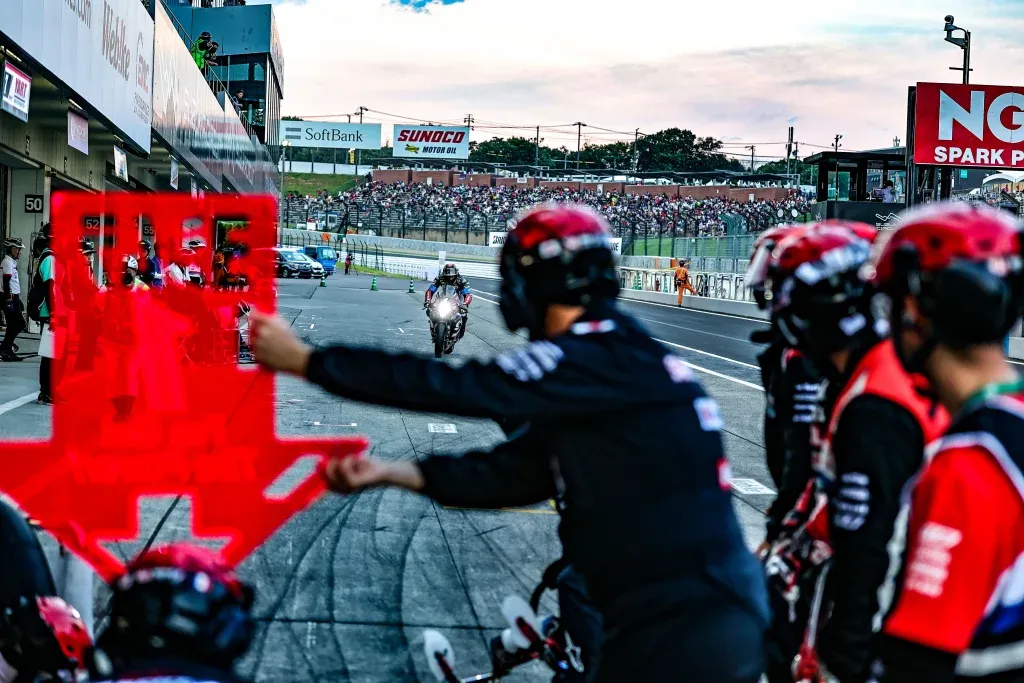
The incoming rider screams down pit lane, hitting the pit limiter, and stops precisely on the painted markers outside the box. The moment the bike halts, the rider hits the kill switch. The engine must be dead.
2.The Fuel Drop: Seconds 2 - 6.
The designated fuel tech slams the heavy overhead dual-nozzle rig into the tank valves. 24 liters of fuel surge into the tank. Simultaneously, the incoming rider dismounts and steps away over the pit wall. The outgoing rider stands ready, checking the cockpit controls.
3.The Mechanical Blitz: Seconds 6 - 12.
The instant the fuel rig decouples, the other mechanics strike. The bike is raised on heavy-duty pneumatic or manual endurance stands. One mechanic handles the front pneumatic impact wrench, spinning the captive axle free. The worn front wheel is pulled, and a pre-heated fresh tire is shoved home. Simultaneously, the rear mechanic repeats the process, ensuring the chain remains properly tensioned on its captive sprocket carrier.
4.Clearing the Visor and Sensors: Seconds 12 - 14.
While wheels are locked down, an assistant uses a quick-evaporating brake cleaner to spray down the calipers and wipes off the windshield, radiator face, and telemetry sensors to remove track debris, melted rubber, and bugs.
5.The Launch: Seconds 14 - 16.
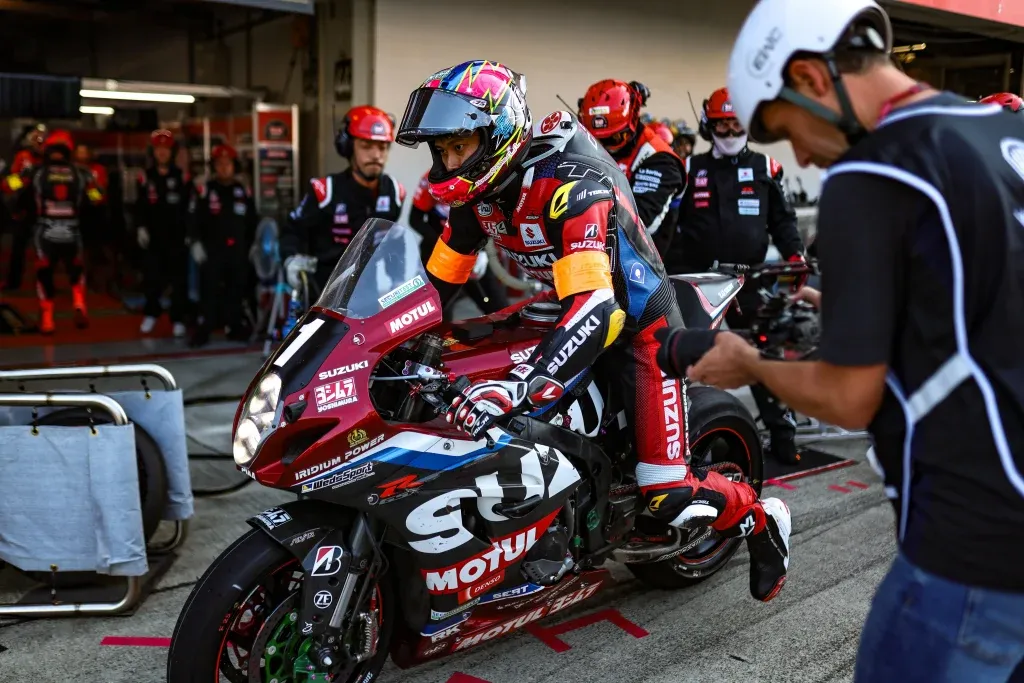
The bike is dropped off the stands. The new rider pulls the clutch, hits the starter button, fires up the Yoshimura-tuned inline-four, and dumps the clutch, spinning the rear tire down pit lane back into the fray.
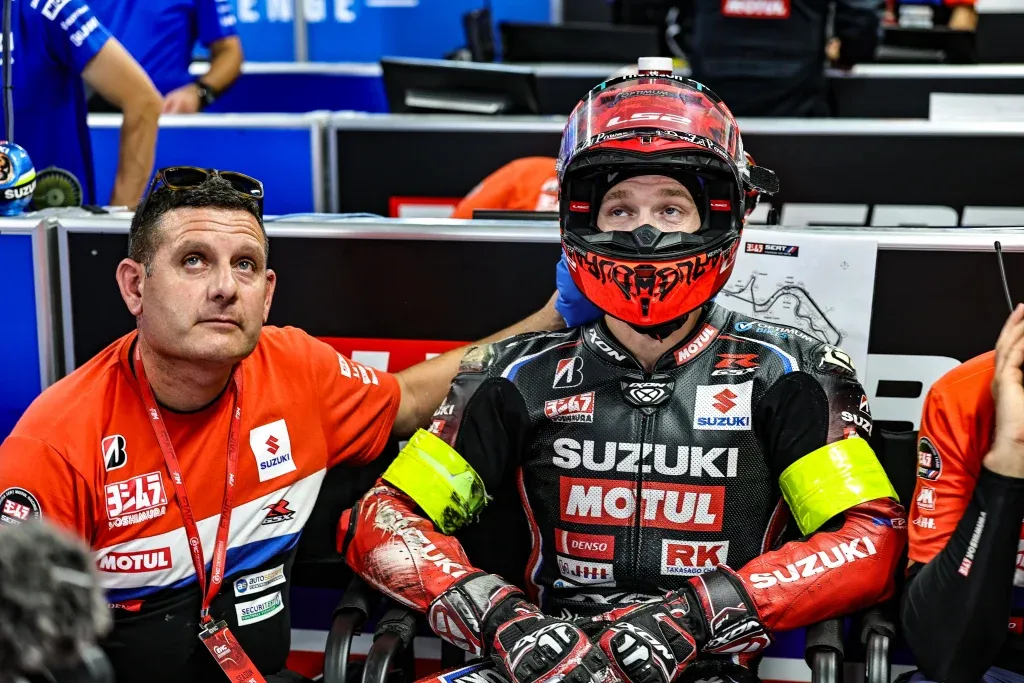
Human Endurance: Managing the 35°C Heat
While the mechanics face intense 16-second bursts of adrenaline, the riders face a slow, compounding war of attrition. Track temperatures regularly skyrocket past 60°C, with ambient air hovering around 35°C and high humidity. Managing the human engine is harder than managing the mechanical one.
Rotation and Strategy
Teams typically run a strict three-rider rotation, meaning each rider covers roughly two to three stints over the eight hours. With stint times averaging 55 to 60 minutes based on fuel efficiency, a rider gets roughly 100 minutes of "rest" between appearances on track.
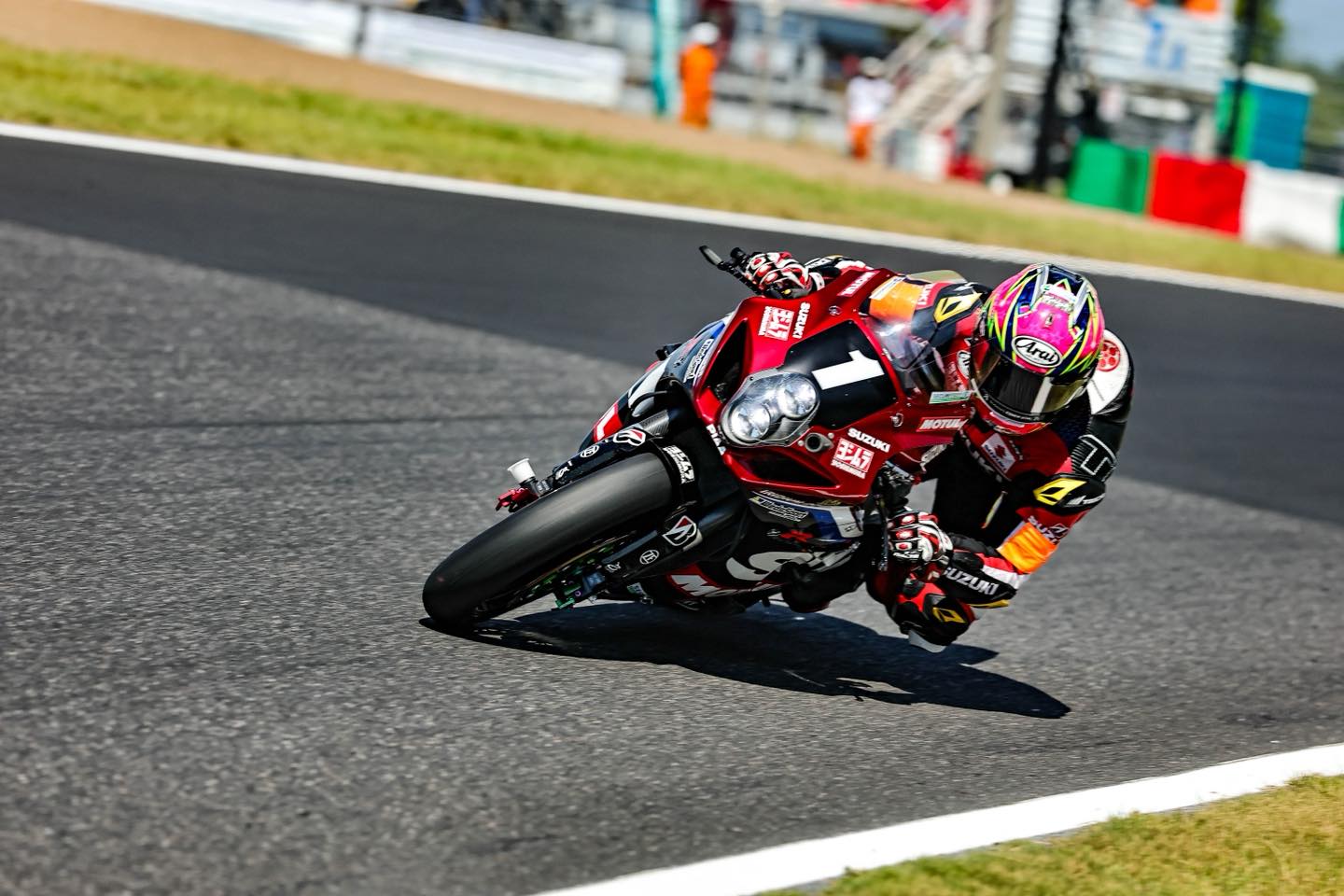
Sleep, Nutrition, and Hydration
- Sleep: There is absolutely no sleep during the Suzuka 8 Hours. Unlike 24-hour races (like Le Mans or the Bol d'Or) where riders might sneak a 20-minute nap, the 8-hour format functions like a prolonged, recurring MotoGP sprint.
- Nutrition: Riders cannot digest heavy, solid meals between stints due to extreme physical strain and blood pooling in working muscles. Diet is restricted to easily absorbable carbohydrates: energy gels, amino acid packs, blended fruit purees, and specialized sports drinks.
- The Rehydration Protocol: The moment a rider unbuckles their helmet after a stint, they are immediately stripped of their leathers, placed in front of high-powered industrial fans, and hooked up to specialized hydration drinks or ice baths. Fluids are blended with high doses of sodium and magnesium to prevent full-body cramping.
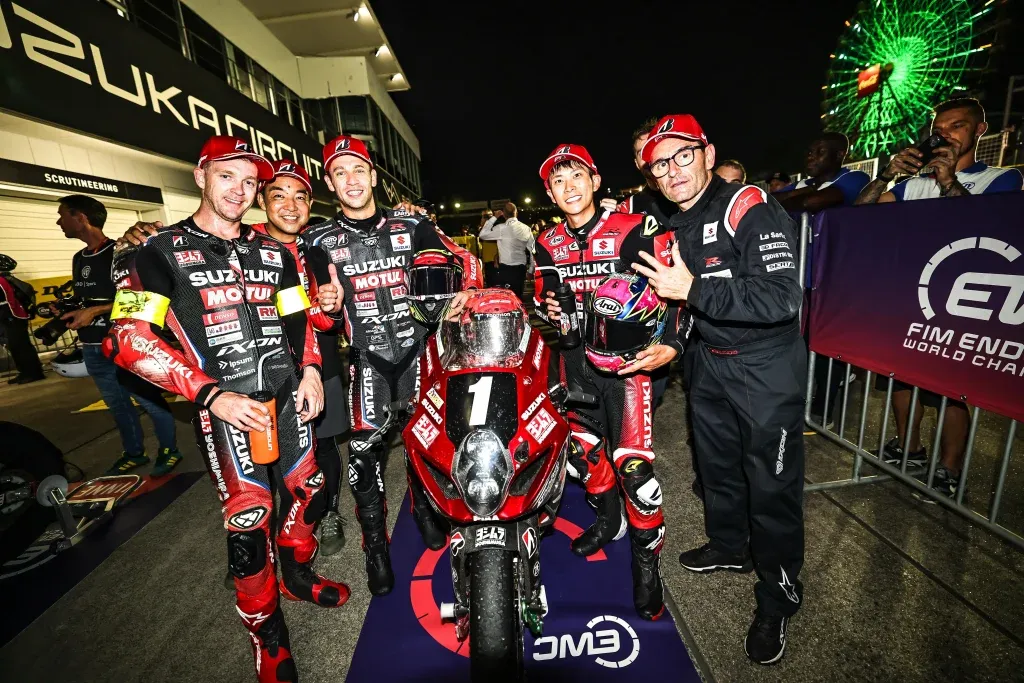
Lubrication Under Extreme Stress: The Role of Motul
The mechanical unsung hero of this grueling environment is the engine lubricant. Yoshimura SERT Motul runs a bespoke factory variant of Motul 300V synthetic oil.
Inside the Suzuki powerplant, the oil faces a dual nightmare: sustaining immense shear stability at 14,000+ RPM while managing extreme thermal load without a cool-down period for eight straight hours. Every pit stop cuts off the cooling airflow entirely for 16 seconds while the internal engine temperatures spike.
The Motul chemistry must prevent friction breakdown, seal the piston rings, and ensure smooth clutch engagement through thousands of violent gear shifts, all while maintaining the exact same viscosity from the opening green flag to the final checkered flag at 7:30 PM.