NAMSSA Bulletin 2026 update: The "Jump Start" Still Depends on Human Judgment

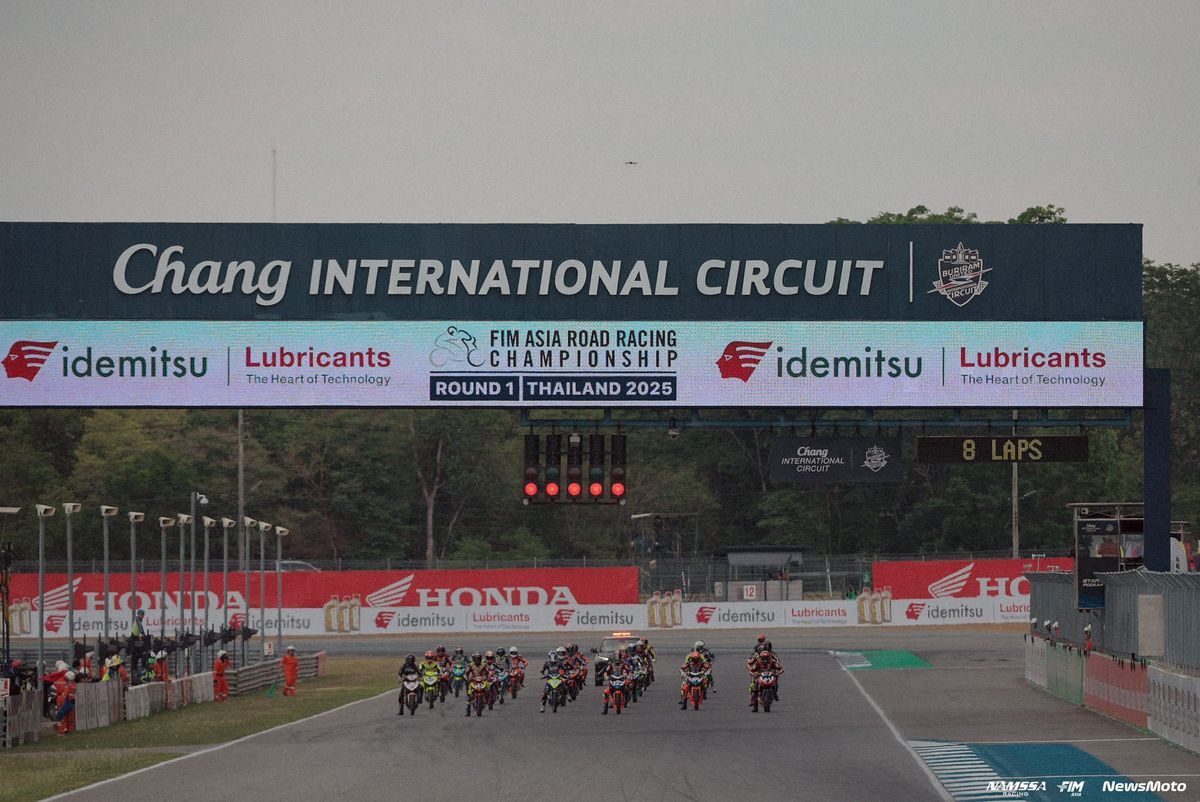
"In the case of a minor movement and subsequent stop whilst the red lights are on, the designated officials will be the sole judge of whether an advantage has been gained."
This means the NAMSSA Bulletin is not "outdated". It is actually in perfect alignment with the very latest 2026 FIM Grand Prix regulations.
MANILA, PHILIPPINES – While modern racing relies heavily on transponders and sensors, the latest FIM Grand Prix World Championship Regulations (Updated April 28, 2026) confirm that not all movement is a penalty. A recent bulletin from NAMSSA Philippines mirrors this global standard, reminding riders and fans that "creeping" is still a judgment call.
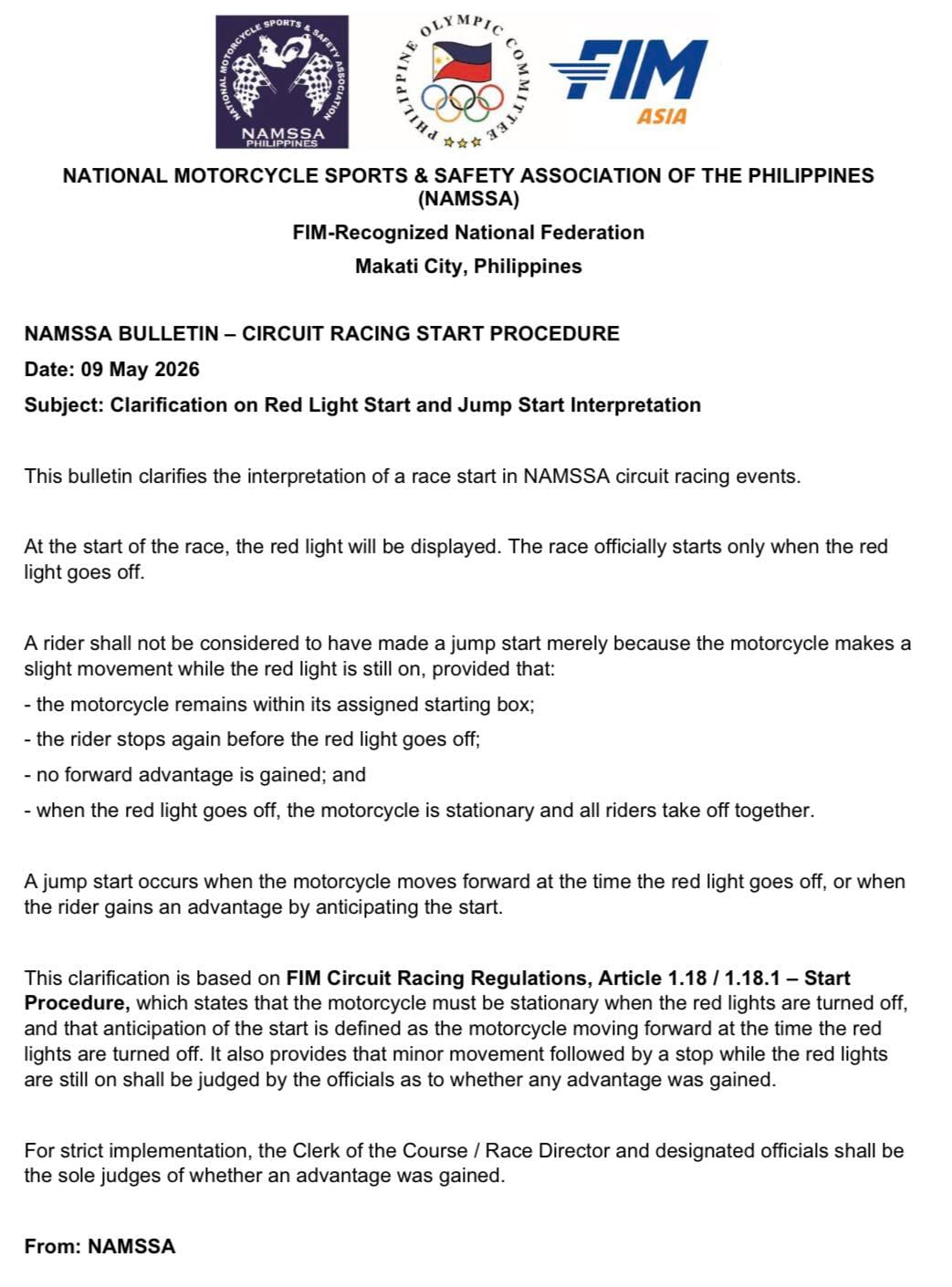
The Rule: Article 1.18.14
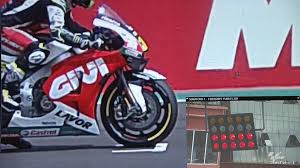
Contrary to the belief that any motion triggers an automatic penalty, the FIM explicitly provides a provision for minor movements. If a rider:
- Makes a minor movement;
- Follows it with a subsequent stop;
- Does so while the red lights are still on;...the FIM Stewards (or the Clerk of the Course locally) become the "sole judge" of whether an advantage was gained.
Why is there room for error?
- The "Wiggle" is Legal... Sometimes: If you slip the clutch early but pull it back in and stop before the lights go out, you aren't automatically doomed.
- The "Advantage" Factor: This is where it gets tricky for mechanics and riders. There is no mathematical definition of "advantage." It is based on the official's perspective of your momentum at the moment of the launch.
- Global Alignment: By adopting this exact wording, NAMSSA is ensuring that local officiating matches the "room for error" allowed in MotoGP and WorldSBK.
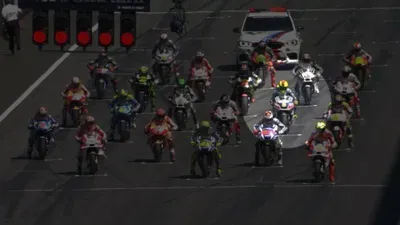
Why? (The Physics of the Stop)
The critical part of this rule is the "subsequent stop."
* FIM: If you move but come to a complete 0 kph stop before the lights go out, you have lost the "Kinetic Energy" advantage we discussed earlier. You are back to static friction.
- The Risk: If you are still "creeping" (even at 1 kph) when the lights go out, you have gained an advantage, and the Stewards will hammer you.
Even with this provision, FIM has always been strict in jump starts. To understand why the global standard is "zero tolerance," we look at historical precedents where even a few millimeters resulted in immediate penalties:
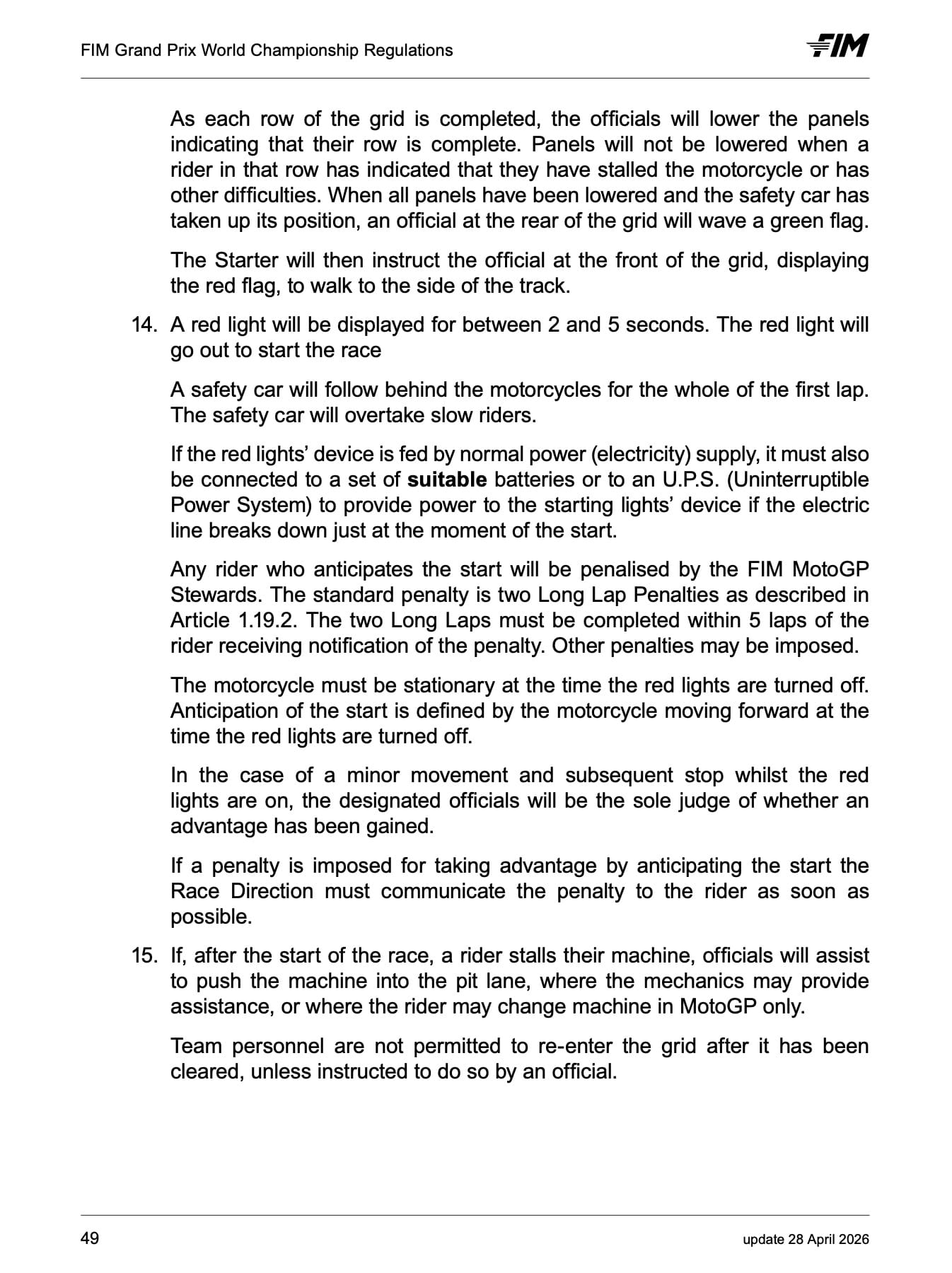
- 2019 MotoGP (Termas de Rio Hondo, Argentina): Cal Crutchlow was penalized with a ride-through for a jump start. Video showed his bike barely crept forward while he was balancing. Crutchlow argued he gained no advantage, but Race Direction ruled that under FIM Article 1.18.14, any forward motion is a breach. (Source: MotoGP.com Official Results).
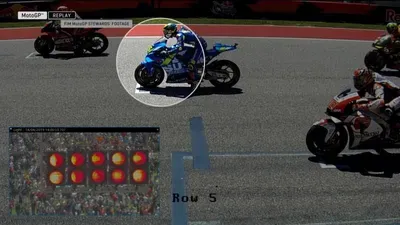
- 2023 MotoGP (Circuit of the Americas, USA): Jorge Martin and Alex Marquez were scrutinized for "loading" the suspension. Because their tires didn't rotate forward, no penalty was given. However, the slightest rotation would have triggered the sensors. (Source: FIM Stewards Report).
Final Word: A Note to the Paddock
For racers, this "clarification" should not be seen as a license to move. While the regulations allow for "minor movement," the line between a legal "adjustment" and a penalized "advantage" is razor-thin and entirely subjective.
"If you have to ask if you moved too much, you probably did."
For riders looking to compete under the FIM umbrella—whether at Tarlac Circuit, Buriram or the Circuit of the Americas, the goal remains the same: Total stillness. In a race where every millisecond counts, the only way to guarantee you won't be penalized is to ensure that you, and your machine, are perfectly stationary until the red light disappears.
Human judgment may be part of the rulebook, but in the heat of a standing start, the safest bet is to leave the "sole judges" with nothing to talk about.