Is Live Racing Back? Eighteen Years at Sepang, and What This Year's Crowd Is Telling Us

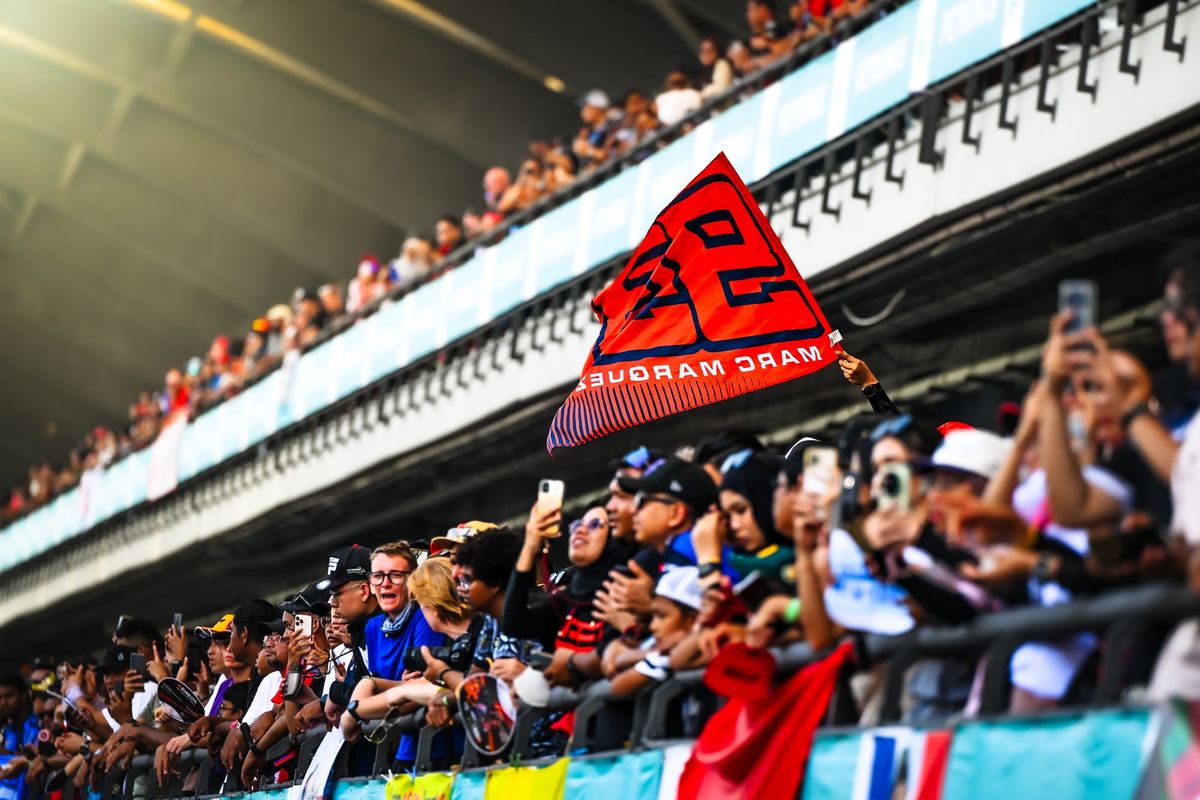
I first walked into Sepang in 2008 as a newcomer. What I remember most is meeting fans from everywhere, people who had flown in from countries who I could share my passion with. As a biker MotoGP races was my ultimate disneyland. Faster and Fastest movies just came out, it was crazy!
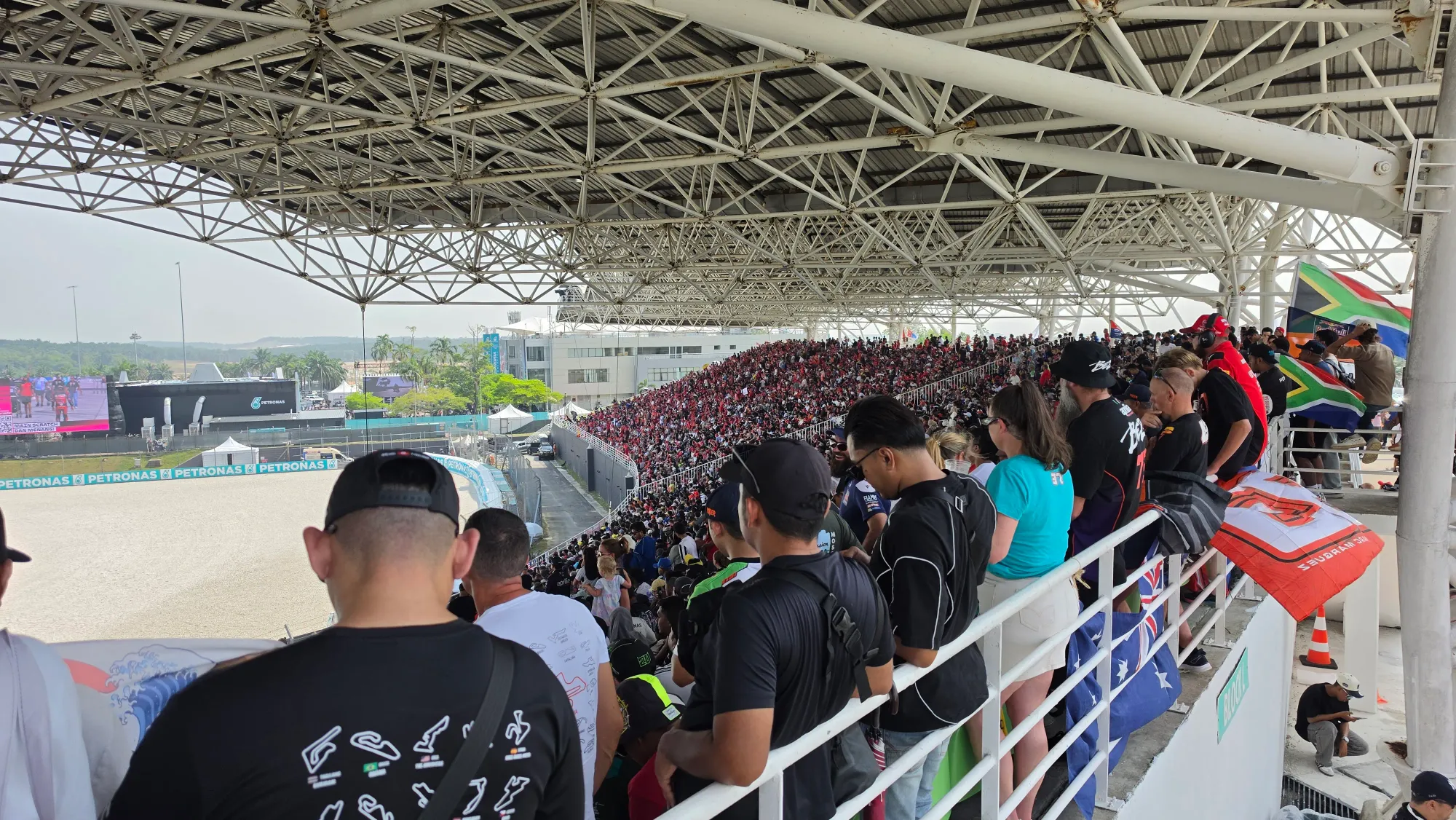
Eighteen years later I walked in again, and something felt different. The queues for buses and Grab rides were longer. The airports were busy. Merchandise was everywhere. And almost everyone around me was posting. I realised I had missed this.
That feeling left me with a question I wanted to test against numbers instead of nostalgia: is live racing actually coming back, or does it only feel that way from where I was standing?
Where I'm coming from
In 2008 and 2009, my sister built fan clubs for Jorge Lorenzo and Aleix Espargaró on forums and Facebook groups. My brother headed a Valentino Rossi fan club in the Philippines. That was how fandom worked then: you found your people online, then you went to a race to meet them.
From the late 2010s through the pandemic, that world went quiet, at least from where I stood. Fewer people in my circle went to races. This year the energy is back, and it looks different. There are new fan clubs, new TikTok accounts, and Threads full of locals sharing their race weekends.
What the turnstiles say
The Sepang gate figures complicate my memory.
Year | Three-day attendance | Note |
|---|---|---|
2015 | 150,563 | |
2016 | 161,533 | |
2017 | 166,486 | |
2018 | 169,827 | First race day above 100,000 |
2019 | 170,778 | Record at the time |
2020, 2021 | No race | Covid cancellations |
2022 | 163,567 | Return after two years |
2023 | 182,912 | |
2024 | 184,923 | |
2025 | 190,977 | Record at the time |
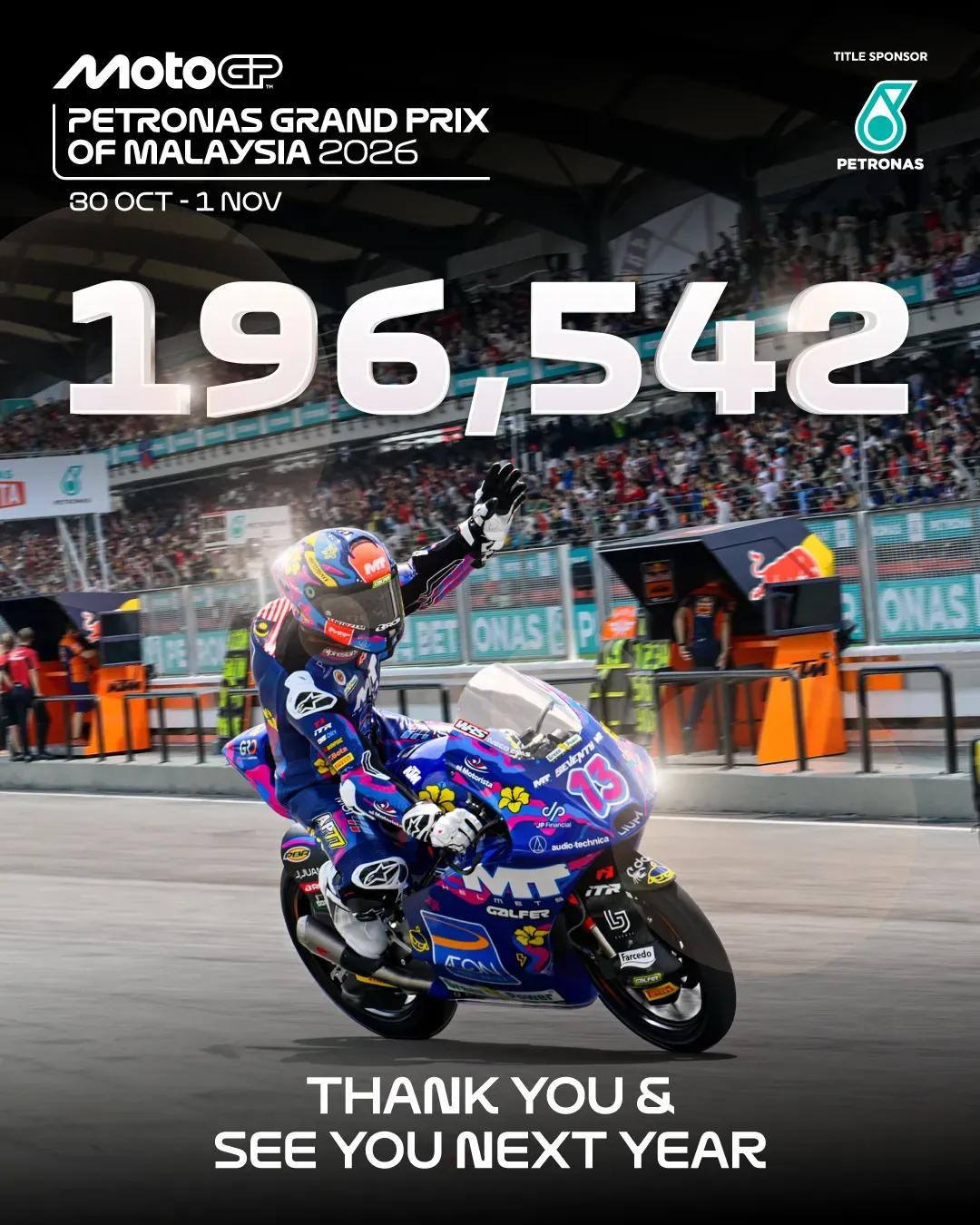
2026 | 196,542 | New record |
Attendance rose every year from 2015 to 2019. It then sat out two cancelled seasons and returned in 2022 about 4% below the 2019 record. Since then it has climbed every year. This year's 196,542 is 15% above 2019 and 20% above 2022.
So the slowdown I felt was real in my circle, but it was not visible at the gate. My hypothesis, and it is only that, is that the crowd never left. What faded was the way we talked about it. Forums emptied, Facebook groups aged, and the new fandom lives on TikTok and Threads, where it is loud enough that I noticed it immediately.
Two caveats. Sepang listed Friday as free entry across all seat zones this year, and I could not find whether earlier years did the same, so the year-on-year growth may be flattered. And the circuit says it sold 52,000 of 56,000 tickets, its best since the pandemic. Tickets sold and attendance are different measures.
The Filipino link is old. Sepang has long been described as the closest venue for Filipino fans, who have been making the trip since 1999. When Lorenzo landed in Manila in January 2016 on his way to the Sepang test, thousands of fans greeted him. The community was there. It just was not on TikTok yet.
Is it the post-Rossi era?
Rossi's last season was 2021, and Sepang's 2022 number dipped. The dip lasted one year. In 2023 the crowd jumped to 182,912. The more likely draw now is Marc Marquez's return to the front. A grandstand named for him in the first-corner K1 area was listed as sold out.
The race itself did not need to be close either. Marquez led from the first lap and won by 4.172 seconds, and the crowd was still the largest the event has recorded. People are paying for the weekend, not only for a finish.
Is it price? MotoGP against the F1 weekend next door
F1 returned to Sepang on 2 to 4 October as the relocated Bahrain Grand Prix. It drew 261,000 people over the weekend, 103,000 of them on race day, more than double the circuit's previous F1 record of 126,690 from 2008. That makes it a clean comparison: same circuit, one month apart.
Ticket (3 days) | MotoGP 2026 | F1 2026, Malaysian MyKad price |
|---|---|---|
Cheapest | Friday free; F Grandstand RM143.75 | G Hillstand RM200 (sold out) |
F Grandstand | RM143.75 | RM1,291.40 |
Main Grandstand | RM345 | RM2,083.40 |
That puts F1 at roughly nine times the price for an F Grandstand seat and six times for the Main Grandstand. International F1 buyers paid from US$219 for three days. Bahrain set the prices and kept the revenue because it paid F1's hosting fee. For comparison, the last F1 race at Sepang in 2017 priced its Main Grandstand at RM613.68.
So MotoGP is the cheaper way to watch live racing at Sepang, by a wide margin. But F1's turnout shows the appetite is not limited to bikes. Malaysia dropped F1 after 2017 with officials saying only about 45,000 people had come in 2016.
Does the Asian Gen Z finally have money? I could not find Malaysian or Filipino data on young fans' income at the track. What the numbers do show is a lower barrier to entry: a three-day grandstand seat at Sepang cost between RM143.75 and RM345 this year.
Who is in the crowd
Dorna reports that more than half of MotoGP's global fanbase is under 35. It put the fanbase at 632 million in 2025, though it has not said how it counts.
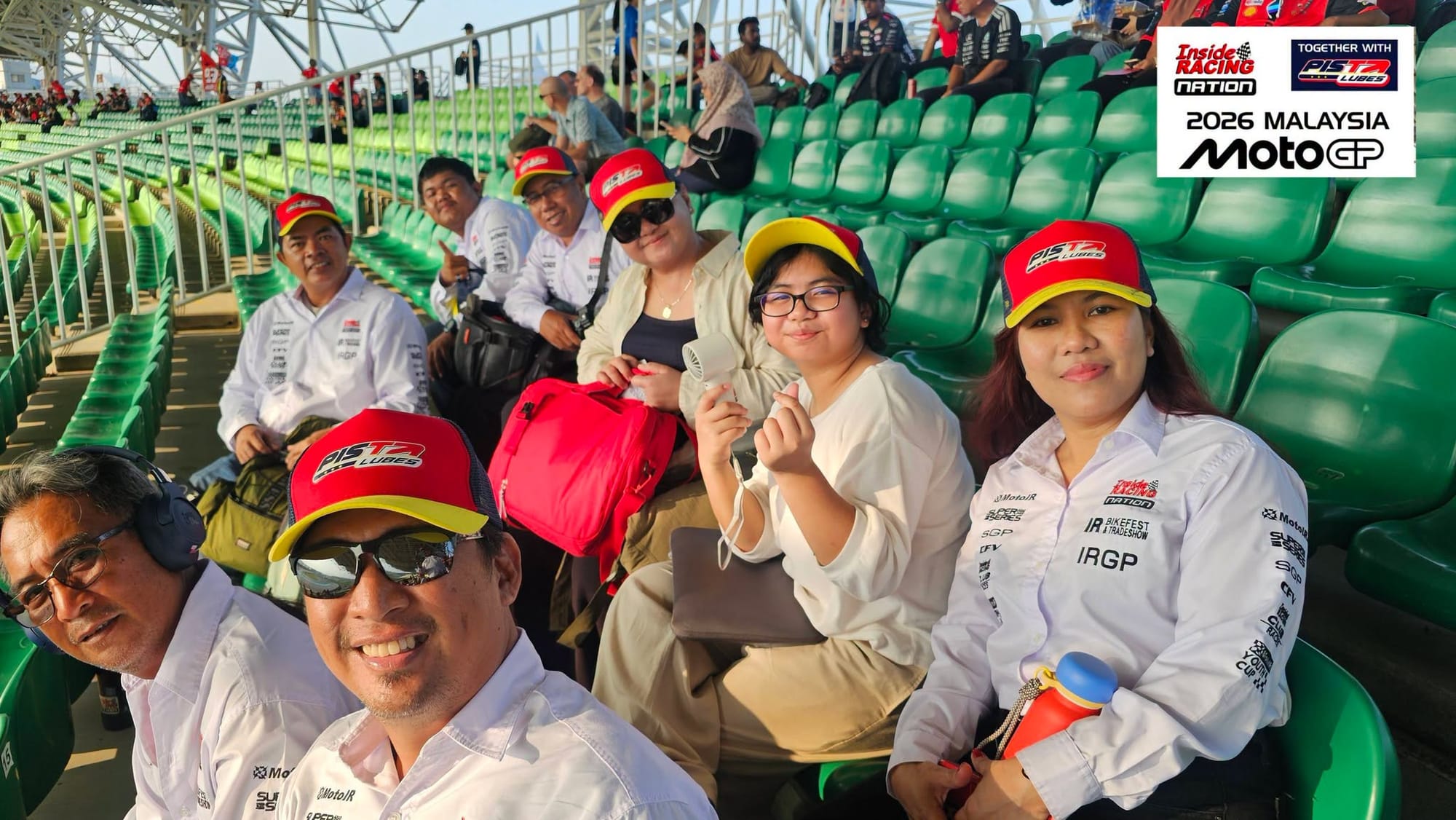
The best research I found on why young people attend is American. A USC Annenberg and ACC study surveyed 2,154 Gen Z adults in May 2026. Of those, 78% said they attend, or would attend, live sport for celebrities, performances or brand activations, and 39% already have. Another 49% discovered a sport through fan-made or viral content. Only 46% agreed that attending live is more enjoyable than watching on TV. This is not Southeast Asian data, but it fits what I saw. Brands brought their own creators into the MotoGP VIP village. I noticed Racingboy (RCB), Pista Lubricants and Brembo, along with many Filipino fans and creators, including Pareng Hayb. At that point the grandstand is partly a content set.
Is it the Liberty Media effect?
Liberty Media completed its purchase of 84% of Dorna on 3 July 2025, valuing it at 4.2 billion euros. In 2025, MotoGP drew 3.66 million fans against 3.03 million in 2024, a 21% rise. But there were 22 rounds instead of 20. Per round, the average rose from 151,663 to 166,396, or 9.7%.
The growth also predates Liberty. 2024 was the first year above three million, and Sepang has grown every year since 2022. In 2026, Liberty reports attendance up 4% across the first 11 races, with records in Thailand (228,228) and Germany (261,831). Growth is continuing, at a slower rate. My read is that Liberty is amplifying momentum that already existed, and the data cannot separate the two.
The F1 playbook is visible, though. Last month MotoGP bikes ran a demonstration at F1's US Grand Prix in Austin, aimed at F1's audience. F1 itself reports an estimated 831 million fans and 3.3 million attendees through the first 10 races of 2026, with Silverstone setting a record 564,000.
Not every circuit is rising. In 2025, Silverstone fell by 18,539 and the Red Bull Ring by 32,627. Hungary drew 80,105, below expectations. "Back" is not uniform.
What has not changed
The things that bothered me in 2008 bother me now: bus queues, heat, thin drinking water, food lines and, at this time of year, haze from Indonesian fires. The haze has a record. In 2015 smoke from those fires covered Sepang and brought health warnings, on the same weekend as the Rossi and Marquez clash. I could not find published air quality readings for this year's weekend, so that part is my own observation.
The logistics problem is not unique to MotoGP either. A month earlier, F1 fans described shuttle waits of hours, one reporting a three-hour trip to KLIA that normally takes about 20 minutes, and long lines for water. Police deployed 649 officers for MotoGP and said traffic should flow more smoothly than at the F1 weekend. MotoGP is now contracted at Sepang through 2031, and the circuit is targeting 200,000 spectators next year. The infrastructure will have to keep up with the crowd.
So, is live racing back?
At Sepang, the numbers say it never really left, and that it is now at a record. The change I felt was real, but it was a change in visibility: a younger crowd, a different platform, and brands that treat the paddock as a content set. Not every circuit shares it, and the Gen Z data I found is American. But this Sunday's crowd, in the heat and the queues, was the largest the Malaysian Grand Prix has ever seen.
Summary
- Record crowd: Sepang drew 196,542 in 2026, 15% above 2019 and 20% above 2022.
- No slump at the gate: Attendance rose every year from 2015 to 2019. What slowed was online fan culture in my circle. That is my hypothesis.
- Price: MotoGP seats cost roughly one sixth to one ninth of F1's MyKad prices at Sepang. F1 still drew 261,000.
- Liberty Media: MotoGP rose 9.7% per round in 2025 and 4% through 11 rounds in 2026. Liberty is amplifying a trend that began earlier.
- Gen Z: Over half of Dorna's fans are under 35. US research points to experiences and creators as the draw. I found no local data.
- Unchanged: Queues, heat, water, food lines and haze.
Disclosure: the author is content manager for Infiniteserv International Corp, whose brands also sponsor his work. Pista Lubricants, mentioned above, is connected to Infiniteserv.