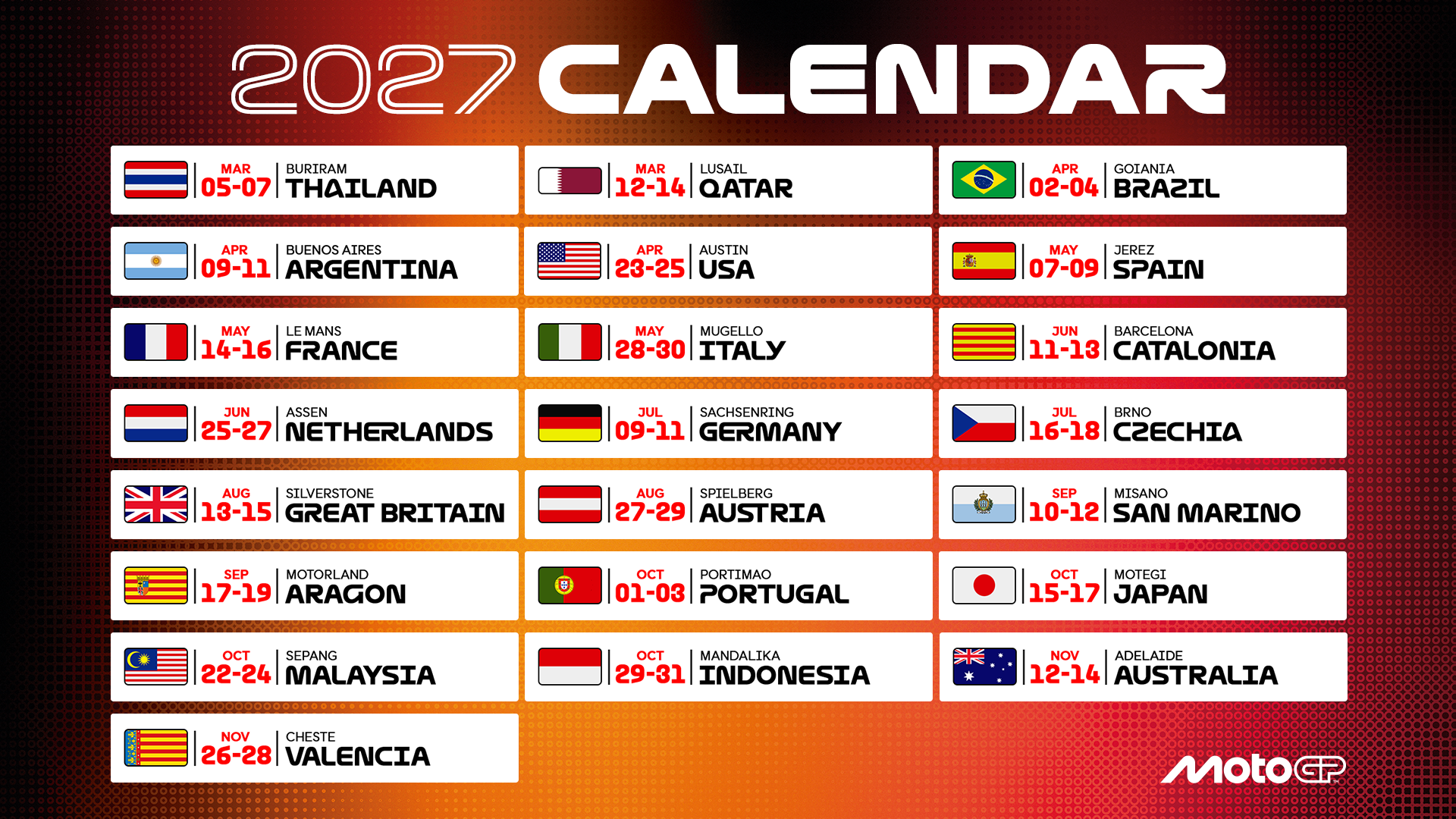
2027 MotoGP Calendar is Here! What to Watch Out Next Year.
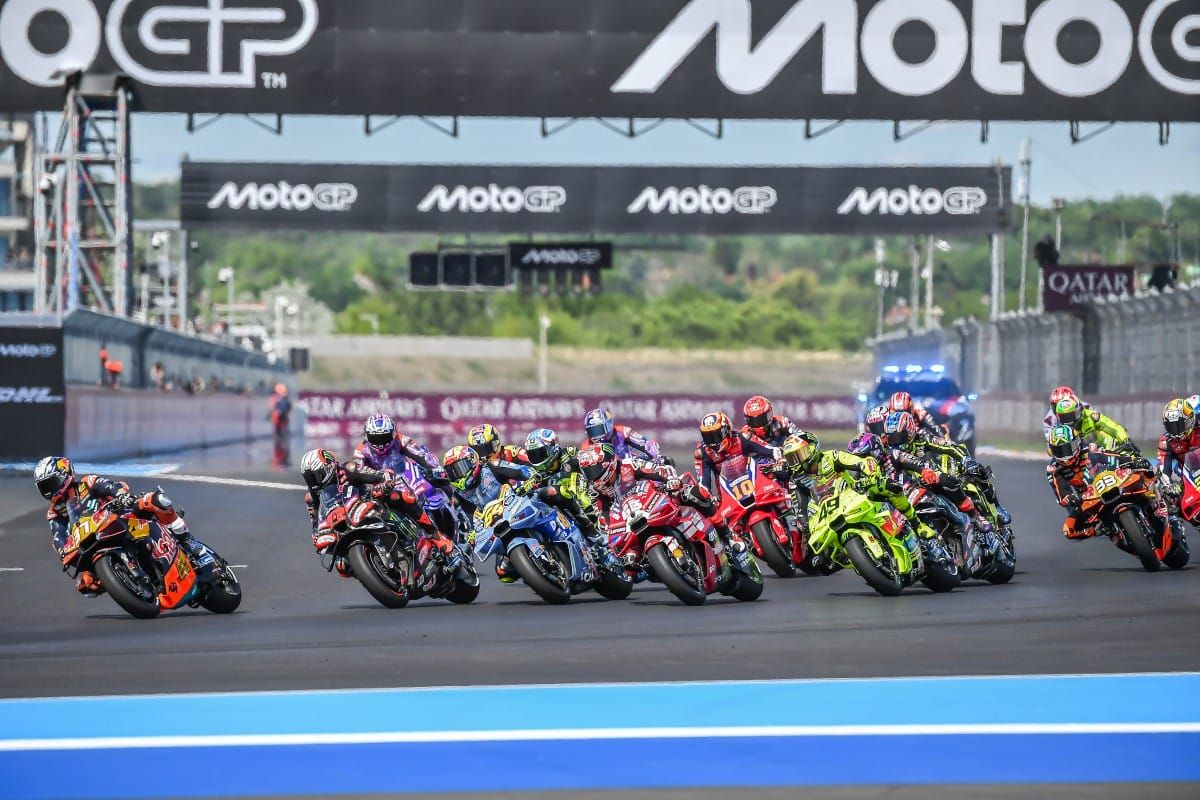
The 2027 MotoGP season marks the biggest technical overhaul in decades. Dorna and the FIM designed the new rules to dial back top speeds, clean up dirty air, ban gizmos, and put a lot more control back into the rider’s right wrist.
1. Engine Reset: 1000cc Down to 850cc
- Capacity Cut: Engines drop from 1000cc to 850cc (maximum bore drops from 81mm to 75mm). This reduces top speeds, improves fuel efficiency, and lowers thermal fatigue on components.
- Engine Allocations: Teams get 6 engines per rider per full season (down from 7).
- 100% Sustainable Fuel: MotoGP transitions from a minimum 40% non-fossil blend to 100% fully sustainable fuel.
- Smaller Fuel Tanks: Tank capacity shrinks from 22L to 20L for Main Races, and down to 11L for Sprints.
2. A Ban on Ride-Height & Holeshot Devices
- Zero Devices: All ride-height adjustment devices—both front and rear, static (holeshot) and dynamic (shapeshifter)—are completely banned.
- Mechanical Grip Matters Again: Launch control and acceleration won't rely on squatting the chassis out of corners or off the line, putting a massive premium on mechanical setup, rear tire management, and rider skill.
3. Aerodynamics Trimmed Down
- Narrower Fronts: The maximum width of the top fairing drops by 50mm, and the front nose tip must be pushed back by 50mm.
- Rear Aero Homologation: Any aero fins or wings behind the rider now fall under strict homologation rules, with only 1 update allowed per season to curb development wars.
- Better Racing: Less front-end downforce means reduced dirty air, less front tire overheating when drafting, and shorter braking zones—all aimed at bringing back late-braking passes.
4. Switch to Pirelli Tyres
- New Rubber Supplier: Pirelli replaces Michelin as the sole tire supplier for the premier class.
- Unpredictable Hierarchy: A tire carcass overhaul completely reshuffles bike chassis design. Teams with strong front-end feedback will have a clean-slate opportunity to leapfrog the competition early in the season.
5. Leveling the Playing Field
- Shared GPS Data: GPS data from all riders across all sessions will be made available to every team post-session.Down-grid teams can instantly see line choices, speed vectors, and braking points across all manufacturers.
- Concession Reset: All five manufacturers start 2027 at Rank B concessions. They will be reassessed mid-season based on performance, preventing any legacy brand from holding an unfair development advantage right out of the gate.
The 2027 rider market represents the biggest contract reset in modern MotoGP history because nearly every grid spot expires at the end of 2026. The two-year deals signed during the previous silly season synchronized almost the entire grid's expiration dates right as the 850cc era begins.
- The Ultimate Gamble: Riders deciding their 2027 seats are flying blind. Committing to a factory before winter testing of the 850cc prototype means betting on which engineering department—Ducati, Aprilia, KTM, Yamaha, or Honda—successfully builds a winning package from scratch.
- The Pirelli Tire Factor: Rider market value is shifting toward adaptability. Scouts are heavily weighing which riders have experience with Pirelli rubber (from Moto2, WorldSBK, or testing) or clean front-end riding styles that can immediately translate to the new tire carcass characteristics.
- Factory Development Weight: Because aerodynamics are trimmed and ride-height devices are banned, factories need feedback-heavy development riders more than ever. A rider who can pinpoint chassis flex and mechanical grip issues will be worth their weight in gold during 2027 pre-season testing.
- Rookie Pathways: The sweeping technical reset lowers the penalty for bringing in fresh talent, since veteran setups from the 1000cc era become obsolete overnight.
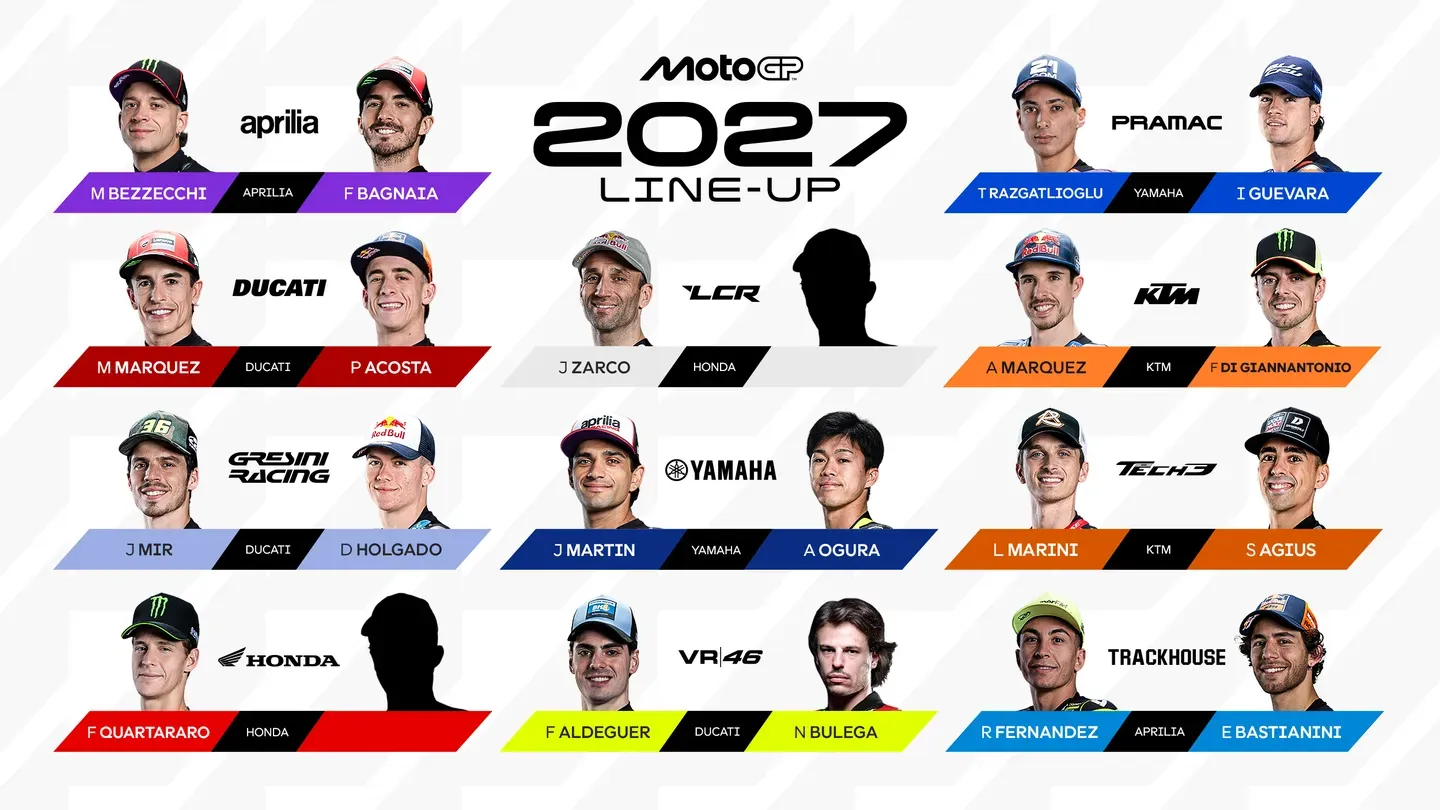
The 2027 line-up represents a massive shake-up across the entire grid.
Confirmed 2027 Factory Teams
- Ducati Lenovo: Marc Márquez re-signs and is joined by Pedro Acosta, who makes the jump from KTM to partner Márquez in red.
- Aprilia Racing: Pecco Bagnaia moves to Aprilia on a long-term deal after losing his factory Ducati seat, pairing up with Marco Bezzecchi.
- Monster Energy Yamaha: Jorge Martín moves to lead Yamaha’s V4 engine rollout alongside Ai Ogura. Both Fabio Quartararo and Álex Rins depart.
- Red Bull KTM: An all-new lineup featuring Álex Márquez (stepping up to full factory status) alongside Fabio Di Giannantonio.
- Honda HRC: Fabio Quartararo joins Honda as their new marquee rider. HRC is finalizing the second seat between Moto2 graduates Diogo Moreira and David Alonso.
Satellite & Independent Teams
- Gresini Ducati: Joan Mir transitions from Honda to ride a factory-spec Desmosedici alongside Moto2 rookie Dani Holgado.
- VR46 Ducati: Fermín Aldeguer shifts over from Gresini, joined by WorldSBK frontrunner Nicolò Bulega making the jump to MotoGP.
- Trackhouse Aprilia: Enea Bastianini arrives to partner Raúl Fernández.
- Pramac Yamaha: Toprak Razgatlıoğlu enters his second year, paired with Moto2 graduate Izan Guevara.
- Tech3 KTM: Luca Marini arrives from Honda, sharing the pit box with rookie Senna Agius.
- LCR Honda: Johann Zarco stays put, with the second seat occupied by whichever rider (Alonso or Moreira) isn't placed at factory HRC.
Notable Departures / Series Switches
- Brad Binder moves to WorldSBK with BMW.
- Jack Miller moves to WorldSBK with Yamaha.
- Franco Morbidelli transitions to WorldSBK (Aruba.it Ducati).
- Álex Rins steps down from full-time Grand Prix racing.